
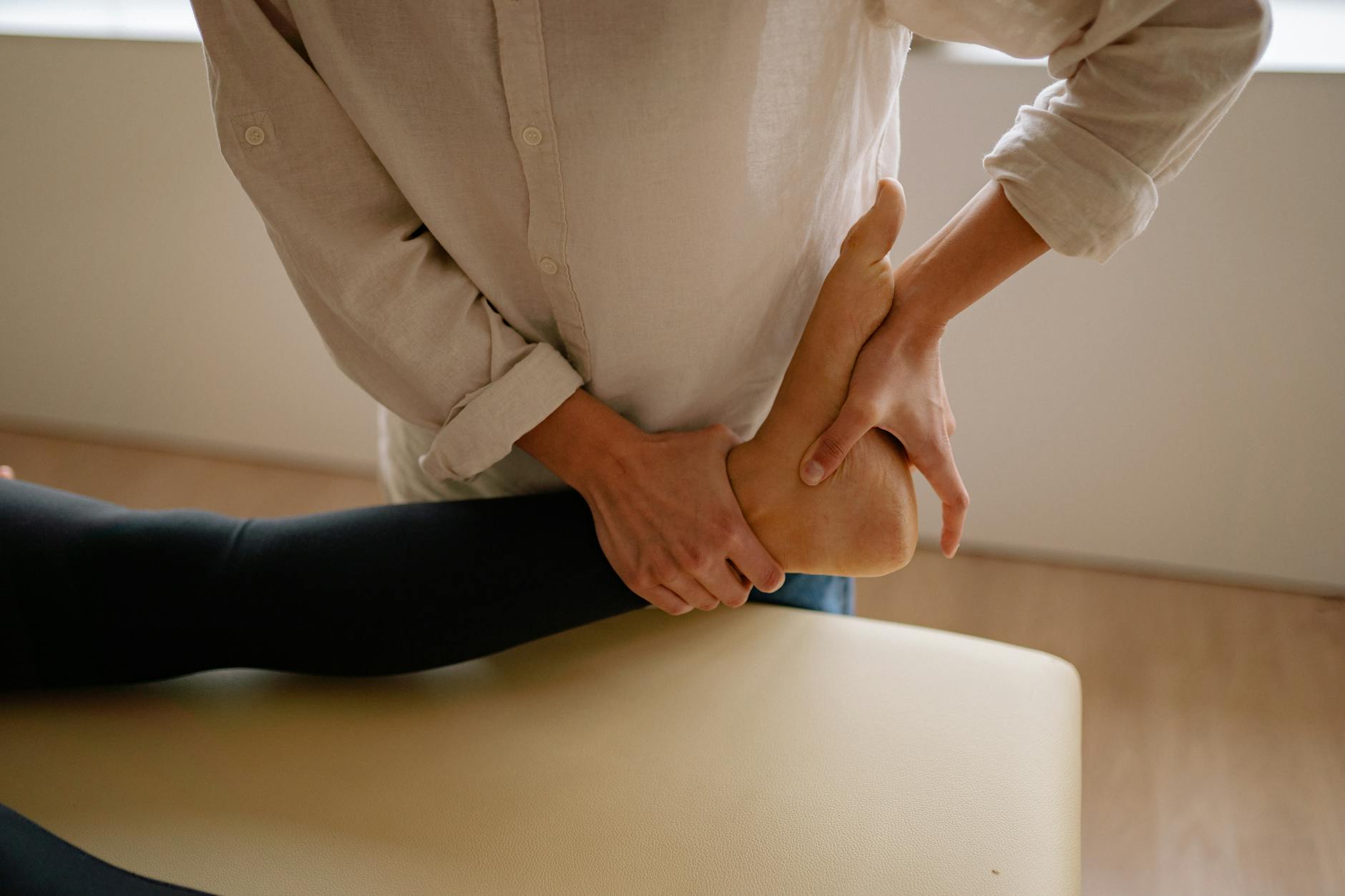
Pain in the heel or along the outer ankle is often blamed on plantar fasciitis or a simple ankle sprain — but in many cases, the cause lies deeper within the soft tissues, muscular coordination, and biomechanics of the lower limb.
Understanding the functional anatomy behind these symptoms allows clinicians and individuals alike to address not just pain, but the underlying dysfunction that causes it.
Anatomy Insight
Two key players in heel and ankle stability are the Quadratus Plantae and the Peroneal (Fibularis) muscles.
- Quadratus Plantae is located on the plantar (bottom) aspect of the foot, attaching to the anterior calcaneus and the tendons of the flexor digitorum longus. Its main role is to assist toe flexion and maintain balanced pressure distribution during gait.
- The Peroneal muscles — longus, brevis, and tertius — run along the lateral side of the lower leg. They stabilize the ankle and prevent excessive inversion, protecting the joint from sprains.
Physiological Role
- Quadratus Plantae acts as a stabilizer, maintaining proper foot mechanics and aiding in shock absorption.
- The Peroneals provide lateral support, ensuring smooth motion and preventing rolling injuries of the ankle.
Together, these structures form a crucial part of the kinetic chain linking the foot, ankle, and lower leg — essential for balance, propulsion, and overall posture.
Common Dysfunctions
When these muscles become tight, weak, or overactive, dysfunction follows:
- Quadratus Plantae hypertonicity can produce heel pain that closely mimics plantar fasciitis, often presenting as tenderness on the bottom of the heel.
- Peroneal dysfunction may lead to lateral ankle pain, instability, or recurrent sprains, typically resulting from repetitive eversion or poor foot mechanics.
These muscular imbalances create a feedback loop — altered motion patterns increase tension, which further aggravates local structures such as fascia, tendons, and ligaments.
Osteopathic Approach
Osteopathic medicine uses gentle techniques to restore function and reduce neuromuscular tension by addressing the root of dysfunction rather than just the symptom.
Flexion Calcaneus (Quadratus Plantae Tender Point):
The patient lies prone while the practitioner flexes the forefoot, gently approximating the calcaneus and metatarsals. This position relieves tension in the Quadratus Plantae and alleviates plantar heel pain.
Lateral Ankle (Peroneal Tender Point):
The patient lies on their side while the foot is gently everted and externally rotated until tenderness significantly decreases. This position resets local muscle tone and improves balance around the ankle.
These counterstrain techniques, developed in osteopathic medicine, reduce muscle spindle hyperactivity, restore normal motion, and promote relaxation without aggressive manipulation.
Self-Care and Home Support
While professional treatment is often necessary, self-care strategies can help reduce symptoms and support recovery:
- Foot rolling: Roll a small massage ball or frozen water bottle under the arch and heel for one to two minutes per side to reduce fascial tension.
- Calf and peroneal stretches: Gentle stretching of the calf and lateral ankle muscles enhances flexibility and circulation.
- Foot strengthening: Pick up a towel or small objects with your toes to activate intrinsic muscles and support the arch.
- Proper footwear: Use shoes with stable arch and heel support, especially if you stand or walk for long hours.
- Contrast therapy: Alternate warm and cool water foot soaks to ease inflammation and stimulate recovery.
Clinical Insight
Osteopathy views the body as an interconnected system — dysfunction in one area affects the whole. By improving muscular coordination, tissue elasticity, and proprioception, we help the body restore balance from the ground up.
Pain is often the final symptom of a deeper imbalance. Understanding anatomy, physiology, and the principles of osteopathic care allows us to move from symptom management to true functional healing.
Takeaway
True recovery begins with understanding.
By addressing muscular imbalances and restoring functional movement, we create lasting improvements in mobility, comfort, and performance — not just temporary relief.
Leave a Reply