
Many people think osteopathy is only about hands-on treatment, joint manipulation, stretching or soft tissue techniques.
While manual treatment is an important part of osteopathy, a professional osteopathic assessment involves much more than simply working on muscles and joints.
A trained osteopath must first determine whether a patient’s symptoms are truly musculoskeletal or whether they may be linked to a more serious underlying medical condition.
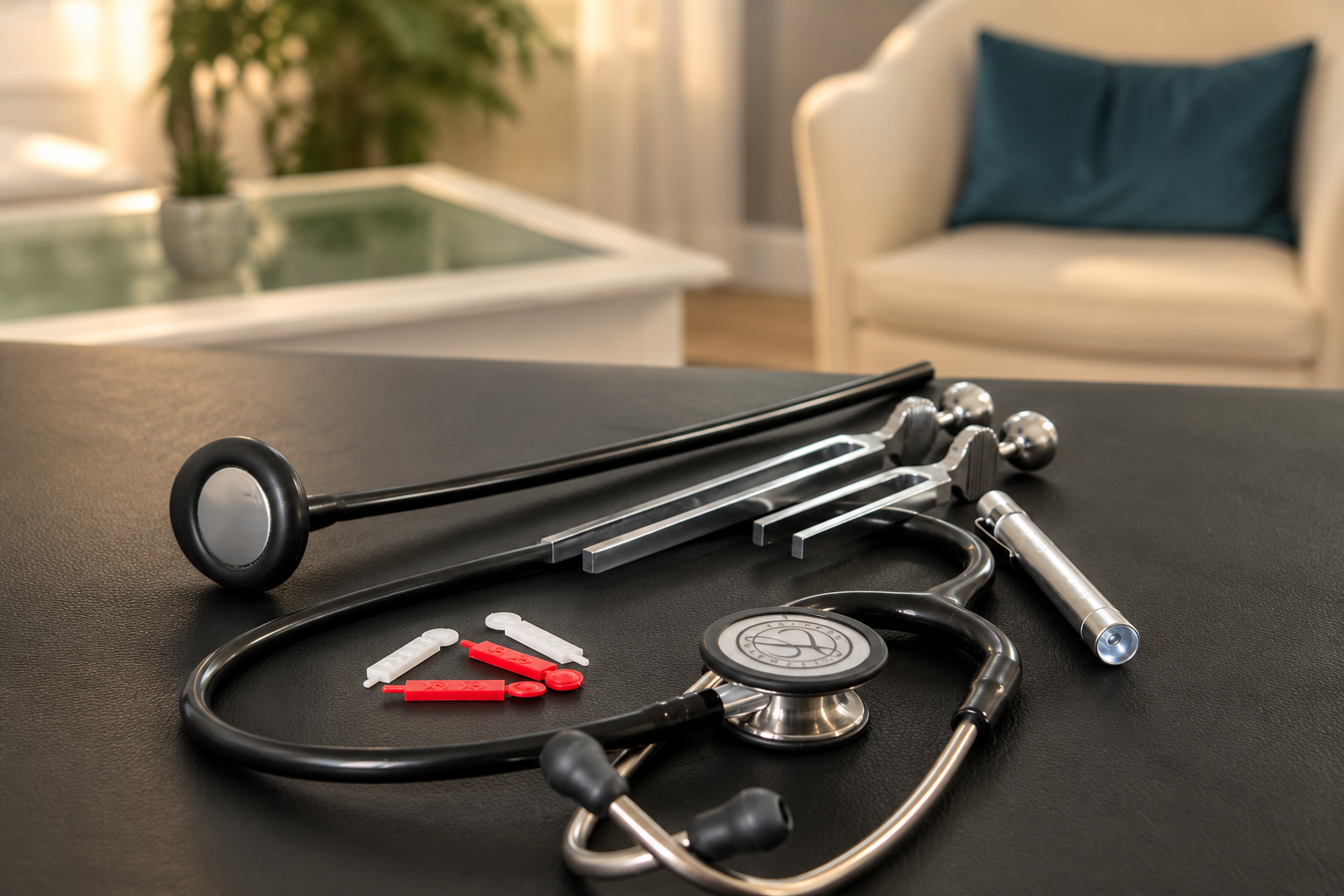
This is one of the reasons osteopaths may use medical examination equipment during assessment.
Why Would an Osteopath Use Medical Equipment?
Pain, stiffness or discomfort do not always come from muscles, joints or posture alone.
Sometimes symptoms that appear to be “back pain”, “neck tension” or “shoulder discomfort” may actually be related to systemic or medical conditions affecting other parts of the body.
This is why assessment and screening are extremely important.
At Osteopathy Syros, assessment may include orthopaedic, neurological and general clinical screening to help identify whether symptoms are musculoskeletal or whether further medical investigation may be necessary.
Equipment an Osteopath May Use
Stethoscope
A stethoscope may be used to listen to:
- heart sounds
- lung sounds
- blood flow through major vessels such as the aorta
This may help identify signs that require further medical assessment rather than manual treatment alone.
For example, some cardiovascular or respiratory conditions may occasionally present with pain or discomfort that can mimic musculoskeletal symptoms.
Blood Pressure Monitor
Blood pressure assessment can be important in some patients, especially when symptoms include:
- dizziness
- headaches
- fatigue
- cardiovascular concerns
Neurological Examination Tools
An osteopath may use:
- reflex hammers
- neurological pins
- light reflex pens
These help assess:
- reflexes
- nerve function
- sensation
- pupil responses
Neurological screening may help identify whether symptoms could involve the nervous system.
Tuning Forks
Tuning forks may sometimes be used during examination when assessing certain injuries or possible bone-related issues.
Why This Matters
One of the most important responsibilities of an osteopath is knowing when NOT to treat.
If symptoms suggest that further medical investigation may be needed, referral to a GP, hospital or specialist is essential.
Patient safety always comes first.
UK Osteopathic Training and Clinical Experience
As a UK-trained osteopath educated in London, my training included over 1000 clinical hours treating real patients under the supervision of experienced clinicians.
This involved:
- musculoskeletal assessment
- neurological examination
- orthopaedic testing
- red flag screening
- recognising signs and symptoms of systemic disease
The goal is not only to treat pain, but also to safely assess whether osteopathic treatment is appropriate.
Osteopathy Is More Than Massage or Relaxation
Massage can be very helpful for muscle tension and relaxation, and physiotherapy plays an important role in rehabilitation and exercise therapy.
Osteopathy combines hands-on treatment with broader assessment skills and whole-body clinical reasoning.
The aim is to understand:
- why symptoms are happening
- whether treatment is appropriate
- how the body is functioning as a whole
Osteopathy in Syros
Whether you are a resident, visitor, remote worker or traveller experiencing pain or stiffness during your stay in Syros, professional assessment is an important part of safe care.
Mobile appointments are available at your:
- home
- hotel
Book Mobile Osteopathy in Syros
📍 Mobile osteopathy appointments across Syros
📅 Book online via Cliniko
📲 Enquire on WhatsApp or Viber
Leave a Reply