
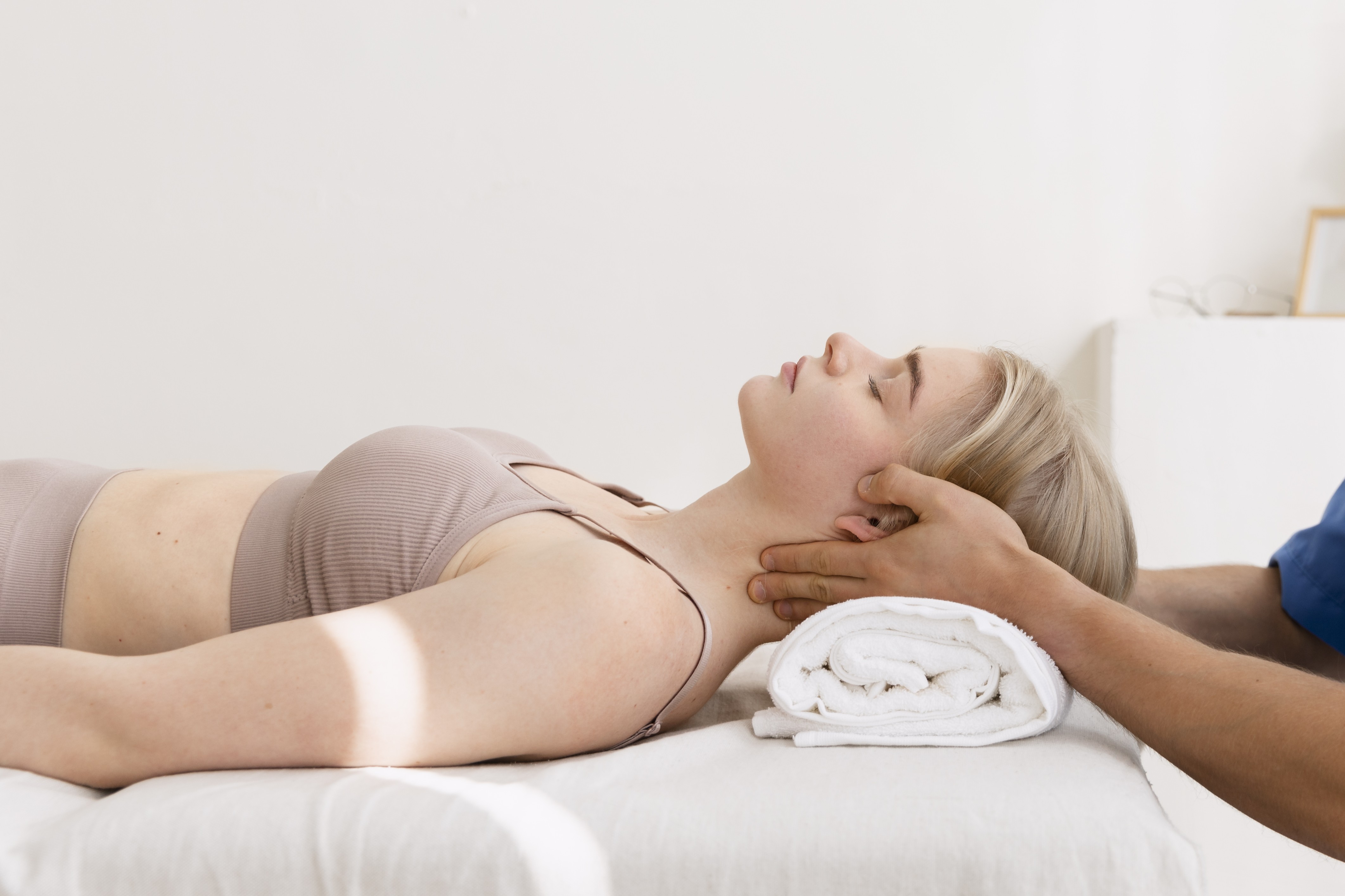
Not every person wants or needs strong manual treatment.
Some people feel sensitive, stressed, guarded, exhausted, or unable to fully relax. Others experience headaches, jaw tension, neck stiffness, shoulder tightness, poor sleep, or a feeling that the body is constantly “on alert.”
For these people, craniosacral osteopathy may be a useful part of osteopathic care.
At Osteopathy Syros, craniosacral osteopathy is offered as a gentle, non-forceful approach that uses light contact and careful hands-on techniques. It may be used on its own or combined with other osteopathic techniques, depending on your symptoms, comfort, and individual assessment.
What is craniosacral osteopathy?
Craniosacral osteopathy is a gentle manual approach within osteopathy.
It focuses on the relationship between the head, spine, sacrum, nervous system, connective tissues, breathing, and the body’s overall ability to relax and regulate tension.
The name comes from two areas:
- The cranium, meaning the skull
- The sacrum, the triangular bone at the base of the spine
However, craniosacral osteopathy is not only about the head or sacrum. It considers the whole body.
A session may involve gentle contact around the head, neck, spine, pelvis, ribs, diaphragm, shoulders, or other areas related to your symptoms.
What does craniosacral osteopathy feel like?
Craniosacral osteopathy is usually very light and calm.
You may feel:
- Gentle contact around the head, neck, back, or sacrum
- A sense of warmth or softening
- Slower breathing
- Less jaw, neck, or shoulder tension
- Deep relaxation
- Sleepiness during or after the session
- Subtle changes in body awareness
Some people feel calmer almost immediately. Others notice changes later in the day or the following morning.
Responses vary. The aim is not to force change, but to support the body in settling, relaxing, and moving with less unnecessary tension.

Why people choose craniosacral osteopathy
People may choose craniosacral osteopathy when they feel that their body is holding tension but stronger treatment does not feel right for them.
It may be suitable for people experiencing:
- Stress-related physical tension
- Neck and shoulder tightness
- Headaches associated with neck tension
- Jaw tension or TMJ-related discomfort
- Facial tension
- Upper-back stiffness
- Rib or diaphragm tightness
- Difficulty relaxing
- Poor sleep linked with physical tension
- A feeling of being constantly tense or guarded
- Sensitivity to stronger manual techniques
- General musculoskeletal discomfort
Craniosacral osteopathy is not a cure for medical conditions. It is a gentle osteopathic approach that may support comfort, relaxation, body awareness, and recovery in some people.
The connection between stress, pain and the nervous system
Pain is not only about muscles and joints.
The nervous system plays a major role in how the body experiences pain, tension, movement, and safety.
When you are stressed, tired, anxious, injured, or in pain, the body may become more protective. This can show as:
- Tight shoulders
- Jaw clenching
- Shallow breathing
- Neck stiffness
- Headaches
- Poor sleep
- Increased sensitivity
- Muscle guarding
- Difficulty relaxing
This protective response can be useful in the short term. But if it continues for too long, the body may feel stuck in a state of tension.
Craniosacral osteopathy uses gentle contact that may help the body feel safer and less guarded. For some people, this can support relaxation and reduce the feeling of being constantly tense.
Why the head, neck, jaw and spine are connected
The head does not work separately from the rest of the body.
The skull connects with the cervical spine, jaw, throat muscles, shoulders, ribs, thoracic spine, diaphragm, pelvis, and sacrum.
This means tension in one area may influence another.
For example:
- Jaw clenching may contribute to temple tension and headaches
- Neck stiffness may affect head position and jaw comfort
- Shoulder tension may increase upper-neck tightness
- Upper-chest breathing may overwork neck muscles
- Stress may increase jaw, face, and shoulder tension
- Poor sleep may increase pain sensitivity
- Pelvic or spinal tension may influence how the body holds itself
This is why craniosacral osteopathy is not only “work on the skull.” It is a whole-body approach.

Important areas that may be assessed
Depending on your symptoms, craniosacral osteopathy may consider:
- Cranial bones and surrounding tissues
- Upper cervical spine
- Suboccipital muscles at the base of the skull
- Temporomandibular joint, also called the TMJ
- Jaw muscles, including masseter and temporalis
- Sternocleidomastoid
- Scalenes
- Upper trapezius
- Levator scapulae
- Thoracic spine
- Rib cage
- Diaphragm
- Sacrum
- Pelvis
- Fascia and connective tissues
The aim is to understand the wider pattern, not only the area where symptoms are felt.
Craniosacral osteopathy for headaches and neck tension
Many people with headaches also experience neck stiffness, shoulder tension, jaw clenching, eye strain, stress, or poor sleep.
Craniosacral osteopathy may be used as part of a gentle approach for headache patterns associated with musculoskeletal tension.
A session may include:
- Gentle craniosacral techniques
- Suboccipital release
- Soft-tissue work around the neck and shoulders
- TMJ and jaw-related techniques
- Thoracic spine and rib work
- Breathing and diaphragm techniques
- Advice about posture, screen use, stress, and jaw habits
Headaches can have many causes. A new, sudden, severe, or unusual headache should always be assessed medically.

Craniosacral osteopathy and TMJ dysfunction
The jaw is closely connected with the head, neck, throat, shoulders, and nervous system.
People with TMJ dysfunction may experience:
- Jaw pain
- Jaw clicking
- Facial tension
- Teeth clenching
- Morning jaw tightness
- Headaches around the temples
- Ear-area discomfort
- Neck and shoulder tension
Craniosacral osteopathy may be combined with work around the TMJ, chewing muscles, upper neck, thoracic spine, ribs, and breathing mechanics.
In some cases, gentle intraoral work may be considered. This is always explained clearly first and only performed with consent. It is not needed for everyone.
Craniosacral osteopathy and breathing
Breathing is closely linked with the nervous system and muscle tension.
When we are stressed or in pain, we often breathe more through the upper chest. This may increase activity in the neck, jaw, shoulders, and ribs.
Craniosacral osteopathy may include gentle work around the diaphragm, rib cage, thoracic spine, neck, and head to support easier breathing and relaxation.
This may be useful when someone feels tense, shallow-breathed, restricted through the ribs, or unable to fully settle.
What happens during a craniosacral osteopathy session?
1. Initial conversation
We begin by discussing what is bothering you.
I may ask about:
- Your symptoms
- When they started
- What makes them better or worse
- Headaches
- Jaw tension or clenching
- Neck and shoulder pain
- Sleep
- Stress
- Breathing
- Previous injuries
- Medical history
- Medication
- Previous treatment or investigations
These questions help build a clearer picture and decide whether craniosacral osteopathy is suitable for you.
2. Assessment
With your permission, I may assess:
- Head and neck movement
- Jaw movement
- Shoulder and upper-back tension
- Posture
- Breathing mechanics
- Rib movement
- Spinal mobility
- Muscle tone
- Areas of sensitivity or restriction
The assessment is adapted to your comfort and symptoms.
3. Explanation
Before treatment, I explain what I have noticed and how I suggest proceeding.
You can ask questions at any point.
Treatment only begins when you understand the approach and are happy to continue.
4. Treatment
Treatment may include craniosacral techniques and, when appropriate, other osteopathic techniques.
This may include:
- Gentle craniosacral contact
- Neck and shoulder soft-tissue work
- Suboccipital release
- TMJ-related techniques
- Thoracic spine and rib techniques
- Diaphragm and breathing work
- Gentle joint mobilisation
- Visceral or cranial approaches where appropriate
The session is always adapted to the individual.
Is craniosacral osteopathy painful?
Craniosacral osteopathy is usually not painful.
The contact is light, gentle, and non-forceful.
You remain in control throughout the session. If anything feels uncomfortable, the technique can be changed or stopped.
After treatment, some people feel relaxed or sleepy. Others may feel mild tiredness, emotional release, or temporary soreness. These responses usually settle within a short time.
Who may prefer craniosacral osteopathy?
Craniosacral osteopathy may be preferred by people who:
- Prefer gentle treatment
- Feel sensitive to pressure
- Do not like stronger manual techniques
- Experience stress-related tension
- Hold tension in the jaw, head, or neck
- Struggle to relax
- Experience headaches linked with neck tension
- Feel physically guarded or “on alert”
- Want a calm and subtle approach
It may also be combined with structural, soft-tissue, visceral, diaphragm, or movement-based techniques as part of a wider osteopathic session.
Simple self-care to support craniosacral osteopathy
These suggestions are general and should not replace individual advice.
1. Jaw relaxation check
Several times per day, ask yourself:
Are my teeth touching?
Is my jaw tense?
Are my shoulders lifted?
Then gently allow:
Lips together.
Teeth apart.
Tongue resting softly on the roof of the mouth.
Shoulders relaxed.
At rest, your teeth should not normally be touching.
2. Slow breathing for relaxation
Sit or lie comfortably.
Place one hand on your lower ribs.
Breathe in gently through the nose.
Let the lower ribs expand softly.
Breathe out slowly.
Keep the jaw relaxed and the shoulders soft.
Repeat for 2–5 minutes.
Do not force deep breathing. The aim is comfort, not effort.
3. Gentle neck movement
Move slowly and comfortably:
- Turn your head left and right
- Gently nod your head
- Roll your shoulders
- Lengthen the back of the neck
Avoid forcing the movement. Stop if symptoms increase.
4. Screen and eye breaks
Tension around the eyes, forehead, jaw, and neck can build during screen work.
Every 30–60 minutes:
- Look away from the screen
- Relax your jaw
- Move your neck gently
- Let your shoulders drop
- Take a few slow breaths
Small breaks can reduce accumulated tension.
5. Notice clenching habits
Many people clench during:
- Driving
- Computer work
- Concentration
- Exercise
- Stress
- Phone use
- Sleep
Try to notice your pattern without judging it.
Awareness is often the first step to reducing unnecessary tension.
6. Create a short evening wind-down routine
If your body feels tense at night, try:
- Reducing screen time before bed
- Gentle breathing for 2–5 minutes
- Relaxing the jaw before sleep
- Soft shoulder and neck movements
- Avoiding chewing gum late in the day
- Keeping the room calm and quiet
Good recovery often starts with helping the nervous system settle.
When should you seek medical advice?
Craniosacral osteopathy is gentle, but it is not appropriate for every situation.
Please seek medical advice if you have:
- Recent head injury
- Sudden severe headache
- New or unusual headache
- Headache with fever or neck stiffness
- Dizziness with neurological symptoms
- Sudden weakness or numbness
- Changes in speech, vision, balance, or coordination
- Recent major trauma
- Unexplained weight loss
- Cancer history with new unexplained symptoms
- Persistent or worsening symptoms
- Any symptom that feels serious or unusual for you
If your symptoms suggest that medical investigation is needed, you will be advised to seek appropriate care.
How many sessions will I need?
This depends on your symptoms, how long they have been present, your general health, stress levels, lifestyle, and how your body responds.
Some people feel a noticeable change after one session. Others may benefit from follow-up appointments, especially when symptoms are long-standing or linked with stress, sleep, posture, jaw habits, breathing patterns, or repeated strain.
If follow-up care may be useful, this will be discussed after your first appointment.
There is no pressure to book a package. The plan is based on your response and goals.
Final thoughts
Craniosacral osteopathy is a gentle approach that may be useful for people experiencing tension, stress-related physical discomfort, headaches associated with neck tension, jaw tension, upper-back tightness, shallow breathing, or difficulty relaxing.
It is not only about the head.
A good craniosacral osteopathic approach considers the whole body, including the cervical spine, thoracic spine, jaw, shoulders, ribs, diaphragm, sacrum, pelvis, and nervous system.
At Osteopathy Syros, craniosacral osteopathy may be used as part of a personalised session to support comfort, relaxation, movement, and recovery.
References
Haller, H., Lauche, R., Sundberg, T., Dobos, G. and Cramer, H. (2020). Craniosacral therapy for chronic pain: A systematic review and meta-analysis of randomized controlled trials. BMC Musculoskeletal Disorders, 21, 1.
Haller, H., Lauche, R., Cramer, H., Rampp, T., Saha, F. J., Ostermann, T. and Dobos, G. (2016). Craniosacral therapy for the treatment of chronic neck pain: A randomized sham-controlled trial. The Clinical Journal of Pain, 32(5), 441–449.
Ceballos-Laita, L. et al. (2024). Is craniosacral therapy effective? A systematic review and meta-analysis. Healthcare, 12(6), 679.
Amendolara, A., Sheppert, A., Powers, R., Payne, A., Stacey, S. and Sant, D. (2024). Effectiveness of osteopathic craniosacral techniques: A meta-analysis. Frontiers in Medicine.
Rechberger, V., Biberschick, M. and Porthun, J. (2019). Effectiveness of an osteopathic treatment on the autonomic nervous system: A systematic review of the literature. European Journal of Medical Research, 24, 36.
Arnadottir, T. S. and Sigurdardottir, A. K. (2013). Is craniosacral therapy effective for migraine? Tested with HIT-6 Questionnaire. Complementary Therapies in Clinical Practice, 19(1), 11–14.
Gürkan, D. et al. (2022). Effect of a craniosacral therapy protocol in people with migraine: A randomized controlled trial. Journal of Clinical Medicine, 11(3), 759.
Do, T. P. et al. (2019). Red and orange flags for secondary headaches in clinical practice: SNNOOP10 list. Neurology, 92(3), 134–144.
Disclaimer
This article is for general educational purposes and does not replace an individual assessment, medical advice, diagnosis, or treatment. If you have severe, sudden, worsening, or unexplained symptoms, please consult a doctor or appropriate healthcare professional.
About the Author
Marcin Wojtaszek
Osteopathy Syros
Marcin provides personalised osteopathic manual therapy, including craniosacral osteopathy, for people experiencing back pain, neck tension, jaw tension, headaches associated with musculoskeletal tension, joint stiffness, muscular discomfort, reduced mobility, and movement-related problems.
His approach considers the full picture, including movement, lifestyle, previous injuries, sleep, stress, breathing mechanics, and related areas such as the cervical spine, thoracic spine, ribs, jaw, diaphragm, pelvis, and sacrum.
Book an Appointment
Appointments are available at your home, hotel, villa, or private accommodation in Syros.
You can book:
- Online through the Osteopathy Syros website
- By WhatsApp
- By Viber
- By email
- By telephone: +30 697 822 7043
Leave a Reply